When it comes to time zones, Michigan can leave you scratching your head. Is it Eastern or Central? Well, grab your favorite snack and settle in, because this state has a bit of a split personality. That’s right—while most of Michigan hangs out in the Eastern Time Zone, a small part likes to rebel and struts its stuff in Central Time. Talk about a state that can’t make up its mind!
Overview of Time Zones
Michigan features two primary time zones: Eastern Time Zone and Central Time Zone. Most of the state operates on Eastern Time, aligning with major cities like Detroit and Grand Rapids. It represents the standard time for large populations, influencing business hours and daily activities.
A small section in the western part of the Upper Peninsula, including areas like Ironwood, adheres to Central Time. Such a distinction creates variations in local timekeeping, which can lead to confusion for residents and visitors alike.
Daylight Saving Time affects both time zones uniformly. Clocks shift forward one hour in spring and revert in fall. This adjustment impacts scheduling, especially for those traveling across time zone boundaries.
For example, when it’s noon in Detroit, it’s 11:00 AM in Ironwood. This difference can affect transportation schedules, business operations, and communication across regions.
Time zone information is crucial for planning events and activities in Michigan. Understanding these differences helps avoid scheduling conflicts and enhances coordination. With Michigan’s unique time zone scenario, awareness becomes essential for both residents and travelers.
Time Zone in Michigan
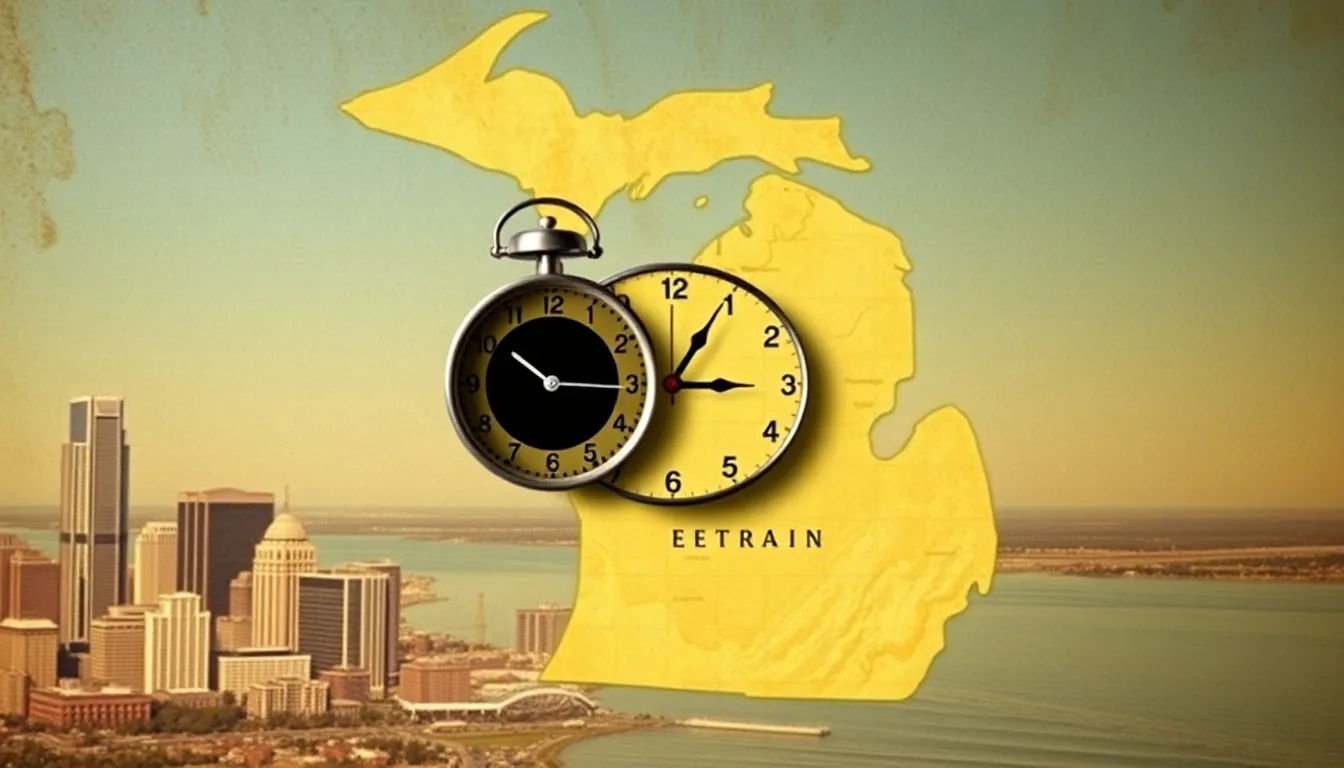
Michigan mainly falls under the Eastern Time Zone, although a small section in the western Upper Peninsula observes Central Time. This division creates a distinct shift in timekeeping across the state.
Eastern Standard Time (EST)
Eastern Standard Time governs the majority of Michigan, including key cities like Detroit and Grand Rapids. Operating on EST means that the local time is UTC-5 during standard time. This time zone supports regular business activities, school schedules, and media broadcasting. In regions like these, daily life syncs well with the typical work hours of other Eastern states, facilitating communication and collaboration across state lines. Michigan’s heavy population in the Eastern Time Zone influences transportation, making it essential for residents to understand this alignment.
Daylight Saving Time Considerations
Daylight Saving Time impacts both time zones within Michigan. Clocks spring forward one hour in March, transitioning to Eastern Daylight Time (EDT) or Central Daylight Time (CDT) in respective regions. This shift occurs on the second Sunday in March and reverts one hour back on the first Sunday in November. Changes in time can complicate scheduling across the time zone boundary, particularly for those traveling from one area to another. Awareness of these adjustments remains crucial for managing plans and avoiding confusion in communications or travel arrangements. Maintaining synchronization helps everyone stay on track throughout the changing seasons.
Comparison with Neighboring States
Michigan shares borders with four states, each with distinct time zone characteristics. Ohio, situated to the southeast, operates entirely in the Eastern Time Zone, aligning closely with Michigan’s main regions. Indiana also follows Eastern Time, though some counties near the border observe Central Time, creating occasional discrepancies.
To the north, Canada’s Ontario uses Eastern Time prominently, particularly in its southern regions. This synchronization simplifies cross-border communication and commerce. By contrast, Michigan’s western Upper Peninsula, specifically Gogebic County, falls under the Central Time Zone, necessitating adaptability for residents and businesses collaborating with counterparts in neighboring states.
Wisconsin, located to the northwest, mainly adheres to Central Time. The hour difference can complicate interactions between Michiganders and Wisconsinites, especially in scheduling events and meetings. In this context, understanding regional time variations becomes critical.
Borders enhance the importance of precise timing for residents, travelers, and businesses. While both Ohio and Indiana remain in Eastern Time, scheduling for cross-border travel into Wisconsin requires thoughtful coordination. Individual counties can present various challenges during Daylight Saving Time, emphasizing the impact on travel plans and business operations.
Awareness of these differences aids in effective planning across state lines. Hefty geographic factors must also be considered, as they influence timing decisions and operational hours. Given these influences, understanding Michigan’s unique position within the surrounding time zones comprises a vital component of regional interactions and logistics.
Historical Changes in Michigan’s Time Zone
Michigan’s time zone history reflects its geographical and political influences. Initially, most of the state followed Central Standard Time prior to the adoption of standard time in the United States in 1883. Changes occurred as technology and transportation developed, emphasizing the need for synchronizing schedules.
In 1900, Michigan switched to Eastern Standard Time, aligning with population centers and economic activity. The state’s legislative actions in 1972 solidified Eastern Time’s status, establishing clarity for residents and businesses. Historical adjustments to Daylight Saving Time have also occurred, further shaping timekeeping practices across the state.
Variations within Michigan add to the complexity. The western Upper Peninsula has historically adhered to Central Time. This disparate application creates complications for residents and businesses, particularly in trade and travel.
In 2007, an extension of Daylight Saving Time changed the clock shifts. These adjustments influenced scheduling, affecting everything from public transport to television programming. The consistency of time across key services became increasingly necessary.
Recent discussions about potential changes reflect ongoing debates about efficiency and alignment with neighboring states. While some areas may advocate a shift to a single time zone, the current split maintains adaptability in response to distinct regional needs. Overall, Michigan’s time zone history illustrates the importance of precise timekeeping in facilitating communication and commerce across its diverse communities.
Michigan’s time zone landscape presents a unique challenge that impacts residents and visitors alike. With the majority of the state in the Eastern Time Zone and a small portion in the Central Time Zone, understanding these differences is crucial for effective planning. The historical context adds depth to this complexity, highlighting how timekeeping has evolved in response to geographical and economic factors.
As Daylight Saving Time approaches, awareness of these time zone variations becomes even more critical. Whether scheduling meetings or planning travel, knowing the local time can help avoid confusion and ensure smooth interactions across the state. By staying informed about Michigan’s time zone nuances, everyone can enhance their coordination efforts and enjoy a seamless experience in this diverse region.