Ever tried charging your iPhone only to find it’s playing hard to get? If your device seems to have developed a strong aversion to power, the culprit might just be lurking in the depths of its charging port. Dust, lint, and mystery crumbs can turn a simple connection into a frustrating game of hide-and-seek.
Fear not! Cleaning the charging port isn’t rocket science, and it doesn’t require a degree in engineering. With a few simple tools and a dash of patience, your iPhone can be back to its charging glory in no time. Let’s dive into the world of lint-free cleaning and restore that spark to your device. After all, who wouldn’t want to avoid the dreaded “charging not supported” message?
Importance Of Cleaning The Charging Port
Cleaning the charging port on an iPhone is crucial for maintaining device functionality. Debris buildup can prevent the charging connector from making a solid connection, leading to slow charging or no charging at all. Dust and lint accumulate easily in small spaces, and ignoring this can lead to costly repairs or replacements.
Proper maintenance of the charging port enhances the device’s lifespan. Regular cleaning helps avoid problems associated with power delivery and ensures optimal performance. It’s important to use the right tools, such as a soft brush or compressed air, to avoid damaging sensitive components within the port.
Obstructed charging ports can also lead to frustrating error messages, disrupting user experience. Users might notice fluctuating power levels, which can hinder essential device functions. Tackling this issue through cleaning can prevent more severe technical problems down the line.
Taking a few minutes to clean the charging port can save time and money. Ensuring the port remains clear boosts efficiency during charging sessions. Moreover, a clean charging port improves overall device hygiene, reducing the likelihood of dirt reaching other internal components.
Regular maintenance keeps the iPhone at its best, enhancing its reliability. A clean charging port may not seem important, but it plays a significant role in daily usage. Prioritizing this task contributes to longer battery life and a better overall experience.
Tools Needed For Cleaning
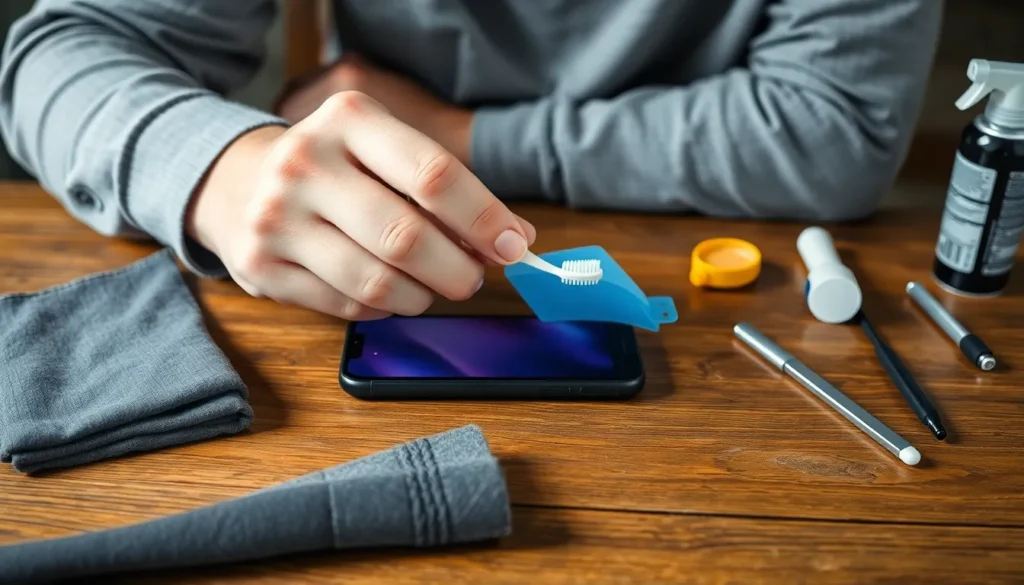
Cleaning the charging port on an iPhone requires specific tools to ensure effective maintenance. Using proper items prevents damage while enhancing functionality.
Recommended Tools
A soft-bristled toothbrush effectively removes lint and dust from the charging port. Compressed air serves as another excellent tool, blowing away debris lodged inside. Microfiber cloths help wipe the surrounding area clean, preventing particles from re-entering the port. Wood or plastic picks provide a precise method for carefully dislodging stubborn debris. These tools offer a safe approach to maintaining an iPhone’s charging port without risking damage.
Avoid These Tools
Avoid using metal objects like knives or tweezers. They can easily scratch and damage the charging contacts. Liquid cleaners are also unsuitable; moisture can compromise internal components. Additionally, avoid using any harsh cleaning agents. These substances can leave residues or cause further issues. Steering clear of these tools ensures a safer, more effective cleaning process.
Step-By-Step Guide To Cleaning
Cleaning the charging port of an iPhone requires careful attention and the right approach. Follow these steps to ensure effective results.
Power Off Your iPhone
Before starting the cleaning process, turn off the iPhone. Powering down protects the device from potential damage and prevents any accidental operations during the cleaning. Holding the side button and volume button simultaneously brings up the power-off slider. Slide it to shut down the phone completely.
Inspecting The Charging Port
Next, inspect the charging port closely. Look for any visible debris, dust, or lint that may be obstructing the connection. A flashlight can help illuminate the area, allowing for a better view of the port’s interior. Identifying the type of debris present guides the choice of cleaning tools.
Cleaning Techniques
For cleaning, choose appropriate tools to avoid damage. A soft-bristled toothbrush can gently dislodge stubborn debris without harming the port. Alternatively, compressed air provides a quick way to blow out any loose particles. Using wooden or plastic picks allows for safe removal of stuck debris. Avoid any metal objects or liquids, as these can cause serious damage to internal components.
Preventative Measures
Regular cleaning helps maintain iPhone functionality and extend its lifespan. Establishing a maintenance routine reduces the risk of debris buildup in the charging port.
Regular Maintenance Tips
Schedule cleaning every few weeks, especially if the phone is frequently in pockets or bags. Use a soft-bristled toothbrush to tackle stubborn debris, ensuring to brush gently. Compressed air can also clear dust and lint, but using it from a safe distance is crucial to avoid damage. Additionally, keeping the charging cable clean contributes to overall hygiene.
Signs Of A Dirty Port
Certain indicators reveal a dirty charging port. Difficulty in charging the device often signals accumulated debris. Users may notice the charging cable disconnects more easily than before. Warning messages about accessories not supported may appear frequently as well. Inspecting the port for visible dust or lint serves as a helpful practice.
Maintaining a clean charging port is essential for optimal iPhone performance. Regular cleaning not only prevents charging issues but also enhances the device’s overall lifespan. By using the right tools and techniques, users can easily remove debris that may hinder connectivity.
Establishing a routine cleaning schedule helps keep the charging port free of dust and lint. This simple practice ensures a smoother charging experience and reduces the likelihood of encountering frustrating error messages. Prioritizing this maintenance task contributes significantly to the longevity and efficiency of the device.